
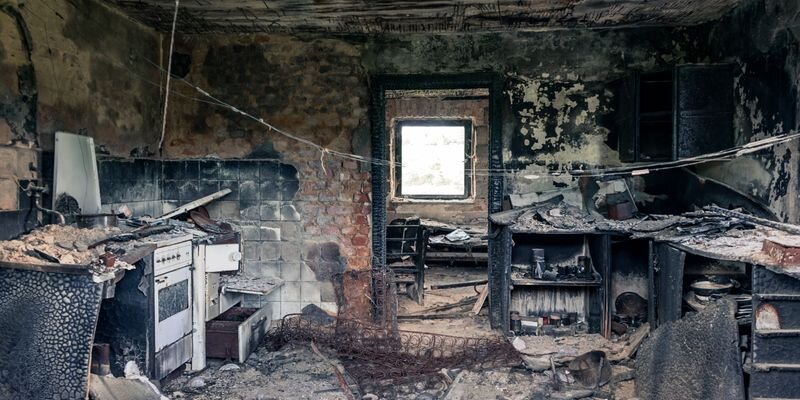
Yes, you can sell a fire-damaged house in Wichita, and you don’t have to fix it first. Houses with smoke damage, a burned-out kitchen, or even a collapsed roof change hands in Sedgwick County every year. The real questions are how to handle the insurance claim, whether repairs are worth it, and which type of buyer makes sense for your situation.
I’m Alex Peransi, and I’ve been buying houses in Wichita since 2019. A house fire is one of the hardest things a homeowner can go through, and the decisions afterward come fast. This guide walks through what to do first, how the insurance money works, what Kansas law says about disclosure, and how to decide between repairing and selling as-is.
This is general information, not legal, tax or insurance advice. For your specific situation, talk to a Kansas attorney, CPA or your insurance company.
Can You Sell a Fire-Damaged House in Wichita?
You can. There’s no Kansas law that stops you from selling a house because it burned. You own the property, and you can sell it in whatever condition it’s in, as long as you’re honest with the buyer about the damage.
What changes is who will buy it and how. A house with light smoke damage might still sell to a regular buyer with a conventional loan after cleanup. A house with structural fire damage usually won’t qualify for most traditional mortgages until it’s repaired, which narrows your buyer pool to:
- Cash home buyers and investors
- Contractors and rehabbers who want a project
- Buyers using renovation loans (slower and more paperwork)
If you still have a mortgage, that’s fine too. The loan gets paid off from the sale proceeds at closing, just like any other sale. I cover that in more detail in can you sell a house with a mortgage in Kansas.
What Should You Do Right After a House Fire?
Before you think about selling, a few things need to happen in the first days. These steps protect your family, your claim, and the value of the property.
- Stay out until it’s cleared. Don’t go back inside until the fire department says it’s safe. Fire can weaken floors, ceilings and roof framing in ways you can’t see.
- Call your insurance company right away. The Kansas Insurance Department’s homeowners claim checklist says to report the loss to your agent or company as soon as possible.
- Document everything. Take photos and video of every room, inside and out, before anything gets cleaned up or hauled away.
- Secure the property. Board up broken windows and doors and tarp any roof openings. This is called mitigation, and most policies expect you to prevent further damage.
- Keep every receipt. Board-up services, tarps, hotel stays and meals can often be reimbursed, but only if you can prove what you spent.
- Don’t start permanent repairs yet. Wait until your adjuster has inspected the damage, or you risk having that part of the claim denied.
A vacant, open, fire-damaged house draws trespassers and neighbor complaints, so board it up quickly.
How Do Homeowners Insurance Claims Work After a Fire?
Fire is a covered peril on standard homeowners policies. The claim is usually split into a few parts, and it helps to understand each one before you make any decision about selling a fire-damaged house.
Dwelling coverage
This pays to repair or rebuild the structure itself: framing, roof, drywall, wiring, plumbing and so on. It’s typically the largest part of the payout and the part that matters most if you’re thinking about selling.
Personal property coverage
This pays for your belongings: furniture, clothing, electronics. This money is yours regardless of what you do with the house.
Additional living expenses (ALE)
If the house is unlivable, most policies pay the extra cost of temporary housing and related expenses. According to the NAIC’s post-disaster claims guide, ALE covers costs above your normal expenses, has its own limits, and does not pay your mortgage.
Actual cash value vs. replacement cost
This is where a lot of homeowners get confused. Replacement cost pays to repair or replace without subtracting for depreciation. Actual cash value (ACV) pays the depreciated value.
If your policy is replacement cost, the insurer will often pay the ACV amount first. The difference, called recoverable depreciation, is paid after you show the work has been done. The NAIC notes there’s usually a deadline to claim it, often six months to a year depending on your policy. If you sell without repairing, you may never collect that holdback, so ask your adjuster about it before you decide.
Total losses in Kansas
Kansas has a valued-policy law for total losses. Under K.S.A. 40-905, when a home insured against fire is wholly destroyed without criminal fault of the insured, the policy’s face amount is treated as conclusive proof of the property’s value and the amount of the loss. If your house is a total loss, ask your adjuster how this applies to your claim.
Why the mortgage company is on the check
If you have a mortgage, your lender is almost always named on the policy. The NAIC guide explains that for major repairs, the insurer will include the lender on the check, and you’ll need to work with the lender to release funds. Many servicers put the money in a special account and release it in stages as repairs are inspected.
City withholding of fire proceeds
Kansas law also lets cities adopt an ordinance under K.S.A. 40-3901 that allows a portion of large fire claims (over 75% of the policy’s face value) to be held until the damaged structure is repaired, removed or made safe. Not every city has adopted one, so ask your adjuster whether any funds are being withheld on your claim and what it takes to get them released.
If you’re having trouble with your claim, you can contact the Kansas Insurance Department at 1-800-432-2484 or file a complaint through insurance.ks.gov. There’s no cost to ask for their help.

Should You Repair the Fire Damage or Sell As-Is?
It depends on how bad the damage is, how much insurance money you’ll actually have, and how much time and energy you have left.
Repairing usually makes sense when:
- The damage is limited (one room, smoke and soot cleanup, a partial kitchen)
- Your insurance payout covers most of the work
- You want to move back in, or you can wait several months to list
- You have a contractor you trust and can oversee the job
Selling as-is usually makes sense when:
- The damage is structural or the house is a near-total loss
- Insurance won’t cover the full cost, or you’re underinsured
- You’ve already relocated and don’t want to manage a rebuild
- You’re dealing with other pressure: a mortgage you can’t keep paying, an estate, a divorce, or code enforcement
Fire repairs are rarely just drywall and paint. Smoke gets into ductwork, insulation and framing. Wiring near a fire often has to be replaced. Water from firefighting can lead to mold. Repairs also need permits. In Wichita, building and trade permits and inspections are handled by the Metropolitan Area Building and Construction Department (MABCD), which serves both the City of Wichita and Sedgwick County. Electrical, plumbing, mechanical and roofing work all have their own permits.
If you’re leaning toward fixing it, I’ve written more about selling a house that needs repairs in Wichita, including how to decide which repairs pay you back.
Do You Have to Disclose Fire Damage When Selling in Kansas?
Yes. If you know about fire damage, you should disclose it, even if it’s been repaired.
Kansas doesn’t have one mandatory state seller disclosure form, but Kansas law (K.S.A. 58-30,106) requires real estate licensees to disclose adverse material facts they actually know about, including the physical condition of the property. As Nolo’s summary of Kansas disclosure rules explains, buyers who were misled can bring claims for breach of contract or fraud, and some have used the Kansas consumer protection act against sellers.
Practically speaking, a fire is almost impossible to hide anyway. Insurance claims show up in claims history databases, the fire department keeps records, and permits are public. My advice is simple: disclose the fire, describe what was repaired and who did it, and keep the paperwork (permits, contractor invoices, insurance estimates) ready to share. Clear records make buyers more comfortable, not less.
When you sell to a cash buyer as-is, the buyer is purchasing the house knowing it’s damaged. You should still be honest about what you know, but you won’t be negotiating over a list of repairs.
How Does Fire Damage Affect a House’s Value?
Fire damage lowers value in two ways: the cost of the repairs, and the “stigma” discount buyers apply for risk and hassle.
Most buyers and investors start with the after-repair value (ARV), what the house would sell for fully fixed up, and work backward. Here’s a hypothetical example:
- Say a house would be worth $180,000 fully repaired.
- Fire repairs are estimated at $60,000.
- An investor also has to cover holding costs, closing costs, resale costs and a profit margin, plus a cushion because fire jobs often uncover surprises.
In that example, an as-is offer might land well below $120,000. That’s the honest trade-off of selling a house in this condition: you give up price in exchange for speed and not having to manage the rebuild.
What drives the number most:
- Extent of structural damage (framing, roof, foundation)
- Smoke and water damage throughout the house, not just where the fire was
- Location and neighborhood values in your part of Wichita
- Whether the house is still standing or is essentially a lot with a tear-down
For more on how cash buyers arrive at their numbers, see how much cash home buyers pay in Wichita.
What Are Your Options for Selling a Fire-Damaged House in Wichita?
You have three main paths. Each one fits a different situation.
| Option | Repairs needed | Typical timeline | Price | Costs to you |
|---|---|---|---|---|
| Sell to a cash buyer or investor | None | Often 1 to 3 weeks | Lowest of the three | Usually no commissions; buyer often pays closing costs |
| List as-is with an agent | None, but buyers may still ask for credits | Weeks to months | Can be higher if the right buyer shows up | Agent commission, closing costs, holding costs |
| Repair and list | Full repairs and permits | Several months or more | Highest potential | Repair costs, commission, closing and holding costs |
Sell to a cash buyer or investor
This is the simplest route for a heavily damaged house. A cash home buyer buys the property as-is, with no repairs, cleanup or showings. You skip the lender appraisal problem, because there’s no lender.
At Real Estate Rescue, that’s what we do. We buy houses as-is for cash, with no commissions, and can close in as little as 7 to 14 days or on the date you choose, at a local title company. The trade-off is real: our offer will be lower than what a fully repaired house would bring on the open market, because we’re taking on the repair cost and the risk.
List the house as-is with an agent
An agent can market the house to investors and handy buyers. This can create some competition, but it usually takes longer, you’ll pay a commission, and many buyers still need financing that a fire-damaged house can’t support. If you’re weighing this, my post on what realtors charge in Kansas breaks down the costs.
Repair it and list it
This brings the highest price, but you carry all the risk: contractor delays, permit inspections, cost overruns, and months of mortgage, insurance, tax and utility payments while the work is done. It works best when the damage is moderate and the insurance money covers it.
If you’re not sure which route fits, I’ve compared them side by side in cash buyer vs. listing with an agent in Wichita.
What Happens to the Insurance Payout If You Sell?
This is one of the most common questions I get, and the answer depends on your policy and the stage of your claim.
In general, the insurance claim belongs to you as the policyholder. Selling the house doesn’t automatically make that money disappear. A few things to keep in mind:
- Personal property and ALE money are tied to your loss, not the house, so they stay with you.
- Dwelling money is where the mortgage company comes in. If your lender is on the check, it will typically be used toward the loan, and selling the house pays off the rest of the mortgage at closing.
- Recoverable depreciation on a replacement cost policy is usually only paid after repairs are completed. If you sell without repairing, you may only receive the ACV portion.
- Funds held by a city under a K.S.A. 40-3901 ordinance may depend on the structure being repaired or removed. Ask whether any applies to you.
Some sellers keep the dwelling payout and sell the house as-is at a price that reflects the damage. Others negotiate with a buyer over how the insurance money is handled. Every policy is different, so before you sign a purchase contract, call your adjuster and ask exactly what you’ll receive if you sell without repairing. Get the answer in writing if you can.
If the insurance money is going to a lender you’re behind on, and foreclosure is a concern, read how to sell your house before foreclosure in Wichita.
What If the City of Wichita Says the House Is Unsafe?
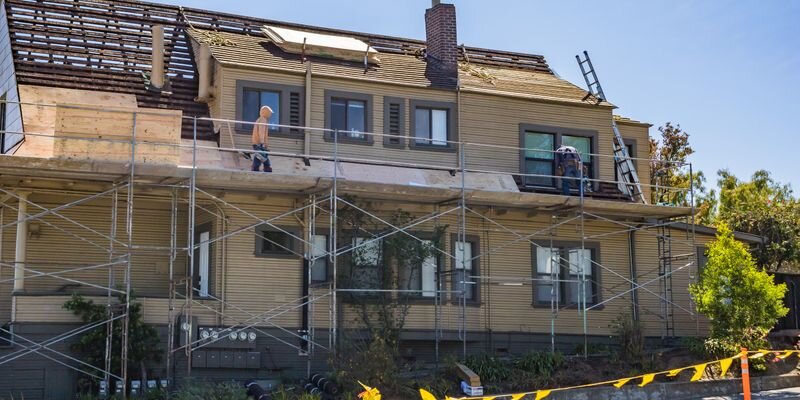
A fire-damaged house that sits vacant and open can end up on the city’s radar. In Wichita, MABCD’s Neighborhood Inspections division enforces the city’s nuisance and minimum housing codes, which includes dealing with dangerous and neglected buildings.
Reporting by The Wichita Beacon describes how the process works. A complaint or inspection can lead to a code case, and a vacant structure that’s unsafe, open to trespassers or a fire hazard can be condemned. If the owner doesn’t repair or demolish it, the city can tear it down and add the cost to the property’s tax bill as a special assessment.
A demolition assessment lowers what you’ll net from a sale and can complicate the title. If you get a notice from the city:
- Don’t ignore it. Call the inspector listed on the notice and ask what’s required and by when.
- Keep the house boarded and the yard maintained to show good faith.
- If you plan to sell, tell the inspector. Buyers can often take over the case and the required repairs or demolition.
Dealing with a house that is also vacant or packed with belongings? See selling a vacant, hoarder, or fire-damaged house in Wichita.
Frequently Asked Questions
Can I sell my fire-damaged house before the insurance claim is settled?
Often, yes. The claim generally stays with you as the policyholder, but selling mid-claim can affect what you’re paid, especially recoverable depreciation that’s only released after repairs. Talk to your adjuster before you sign a contract so you know what you’ll receive.
Do I have to clean up the house before selling?
Not if you sell as-is to a cash buyer or investor. You can leave debris, damaged belongings and the fire damage itself. If you plan to list with an agent, some cleanup and odor removal will usually help the house show better.
Do I have to tell buyers about a past fire in Kansas?
If you know about it, you should disclose it, even if it was fully repaired. Kansas law requires licensees to disclose known adverse material facts, and buyers who are misled can sue. Keep repair records and permits to share with buyers.
Will a bank lend on a fire-damaged house?
Usually not on a standard loan if the damage is significant, because the house won’t meet lending and appraisal standards. That’s why most fire-damaged houses sell to cash buyers, investors or buyers using renovation loans.
How fast can I sell a fire-damaged house in Wichita?
Selling to a cash buyer can close in as little as one to two weeks, depending on title work. Listing as-is can take weeks to months, and repairing first can take several months before you even list.
Who can help if my insurance company won’t pay a fair amount?
Start by explaining your disagreement to the insurer and getting your own contractor estimate. If that doesn’t resolve it, the Kansas Insurance Department takes complaints at 1-800-432-2484. For larger disputes, a Kansas attorney who handles insurance claims can review your policy.
Talk Through Your Options With Us
If you’re dealing with a fire-damaged house in Wichita and want a straight answer on what it’s worth as-is, we’re happy to walk through it with you, with no pressure either way. Even if repairing or listing turns out to be the better move for you, we’ll tell you. Call Real Estate Rescue at (316) 925-7851.